
Smart mouthguards and science unite to cut concussion risk
07 Apr 2026
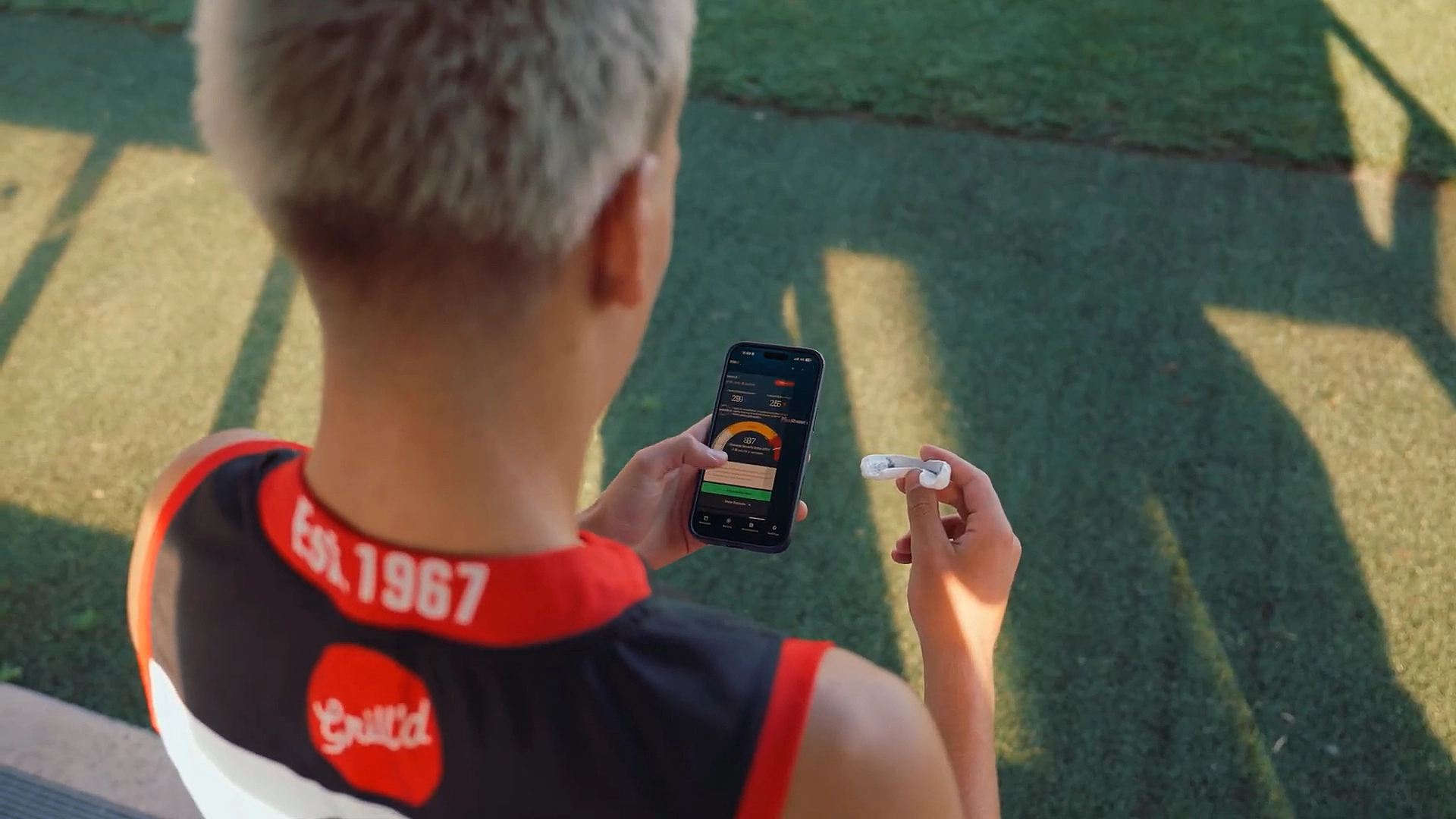
A joint research trial between SAHMRI and Adelaide University is combining smart mouthguard technology with brain imaging scans to provide essential, in-depth insight on the impact of collisions in contact sport, aiming to improve the detection and management of concussion and help protect children’s developing brains.
Biomechanical engineer Dr Ryan Quarrington says replacing guesswork with evidence will improve clinical accuracy and relieve the burden from club doctors and code administrators, while also protecting player welfare.
“We know that repeated head impacts can have a cumulative effect over time, potentially contributing to long-term brain health problems. Chronic Traumatic Encephalopathy (CTE) is a progressive, degenerative brain disease thought to be caused by repeated head trauma and concussions,” Dr Quarrington said.
“The problem is we don’t have a good idea of how head impact metrics, including severity and number of events, relate to brain health and brain function.”
Through partnerships with the Adelaide University Rugby Club and Norwood Football Club’s SANFL and SANFLW teams, the trial has collected data from players wearing custom smart mouthguards developed by Australian company HitIQ, which contain small motion sensors that record head impacts and estimate their severity.
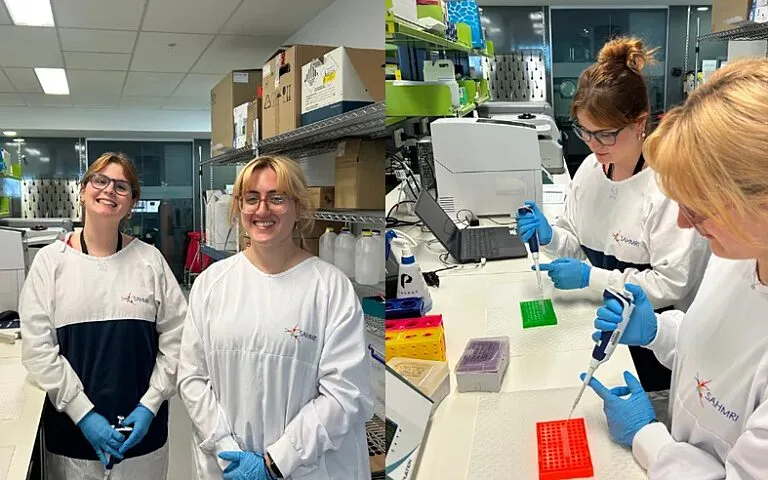
These measurements are then combined with repeated brain MRI scans collected by SAHMRI’s Clinical & Research Imaging Centre, using the National Imaging Facility’s Cima.X 3T MRI scanner, allowing researchers to investigate whether repeated head impacts are associated with subtle changes in brain structure.
Support from the NeuroSurgical Research Foundation enabled Dr Quarrington to recruit National Imaging Facility neuroinformatics scientist Hugh McCloskey from the Cardiff University Brain Research Imaging Centre, who helped develop the advanced MRI methods used on the Cima.X and the data-processing pipelines needed to detect these changes.
Before each MRI session, participants also complete detailed cognitive testing so the team can assess how any brain changes may relate to memory, attention, and problem-solving.
“While the mouthguard technology is there, the real challenge is understanding exactly what those measurements mean for player safety and welfare. If this is introduced into competitive sport before that evidence is clear, there is a real risk that clubs, players, and fans will lose confidence in it if it performs poorly or is seen to unnecessarily disrupt the game.”
“By combining it with the MRI images and neurocognitive assessments, we’re getting a clearer understanding of just how much impact is too much and we’re seeing some strong signals in the relationship between the exposure, the number of impacts and the cumulative acceleration values.”
“It will improve player welfare and assessments by removing doubt and ensuring those players who are assessed as fit can remain on the field. Longer term, having better protected players means more years in the game and reduced long-term brain health challenges.”
Tom Christian, HitIQ’s Head of Product and Technology says the ultimate aim is to equip sporting organisations and parents with evidence based and accessible tools that support informed decisions and enable the next generation to remain active while prioritising brain health.
“A key challenge in the field remains the limited availability of high quality research clearly linking head impact exposure to long term brain health outcomes. Ryan’s use of our technology and his research is making a significant contribution to addressing this gap and advancing understanding in this critical area,” he said.
“By providing a valid and reliable foundation for player welfare decision making, we can enhance the protection of athletes, particularly children and young adults during critical stages of brain development.”
Dr Quarrington and his team were recently awarded a Channel 7 Children’s Research Foundation project grant to expand the research to junior athletes aged 14 to 16. The project will combine smart mouthguard data, advanced brain MRI, and cognitive testing to understand how head impacts affect the developing brain, and to establish child-specific thresholds that can better guide concussion detection and recovery.
Early findings will be presented at a SAHMRI forum “Elite Sport meets Elite Science” to an audience of leading sports officials and medical experts, as part of the AFL Gather Round Festival of Footy.
See the full story on 7NEWS
Watch hereRelated Articles




SAHMRI is located on Kaurna Country. We pay respects to the Kaurna people of the Adelaide Plains and to all Aboriginal and Torres Strait Islander people. We are committed to embracing knowledge and culture as we continue our working journey to incorporate Aboriginal health research across all of our themes and further reconciliation.
Read more"Tirki nguta tappa tangka marninithi"
(Learning and knowledge are the pathway to alter the mind)
- Uncle Lewis Yerloburka O’Brien, Kaurna Elder