
New research explains how the gut detects parasites and triggers sickness response
26 Mar 2026
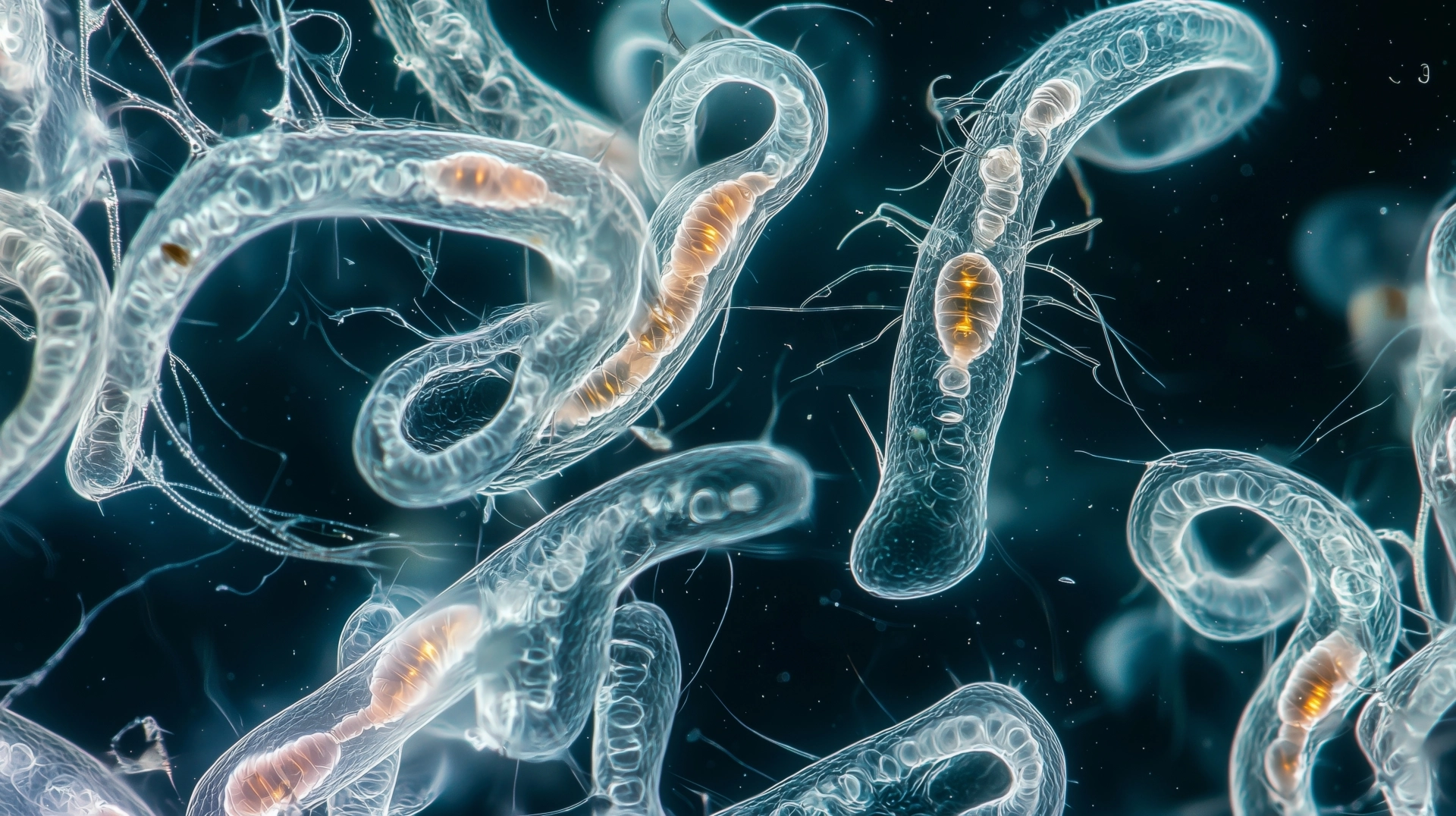
A previously unknown gut–brain signalling pathway governing how parasitic infections lead to nausea, appetite loss and other sickness symptoms is now understood by science.
Working alongside collaborators in the United States and China, researchers at SAHMRI and Adelaide University have revealed that two specialised gut cell types work together to sense parasites and activate protective responses through the vagus nerve.
Professor Stuart Brierley, Director of the Visceral Pain Research Group at SAHMRI and co-senior author on the study published in Nature, says the findings fill a major gap in understanding how the body senses and responds to gut infections.
“We know parasite infections make people feel unwell, lose their appetite and change their behaviour, but the exact communication pathway from the gut to the brain has been a mystery until now,” Prof Brierley said.
“We’ve shown that tuft cells act as the first detectors. They release acetylcholine, which pushes EC cells to release serotonin, and that serotonin is what drives the nerve signals that tell the brain something is wrong.”
The study showed this signalling occurs in two distinct phases. During early infection, tuft cells produce only brief pulses of acetylcholine that cause little downstream activation.
As the infection progresses and the immune system expands the tuft cell population, acetylcholine begins to be released continuously.
This sustained signalling drives a much stronger serotonin response from EC cells, activating vagal neurons that turn off appetite and ramp up nausea.
Prof Brierley says this mechanism explains why symptoms escalate as parasites establish themselves.
“In the initial stages there may be no symptoms at all, but once type 2 inflammation builds and tuft cells multiply, the communication loop becomes much stronger,” he said.
“The gut effectively sends a persistent danger signal to the brain, and that leads to appetite suppression and the discomfort people typically experience during infection.”
The findings open new avenues for understanding and potentially treating gut–brain conditions. By identifying the exact cell types and neurotransmitters involved, researchers now have a clear pathway that could be targeted to reduce nausea, improve appetite or modulate gut–brain signalling in a range of disorders.
“This is a major step forward in understanding how sensory and immune systems interact in the gut,” Prof Brierley said.
This work was funded by the National Health and Medical Research Council (NHMRC).
Discover more about Professor Brierley here
Discover moreRelated Articles





SAHMRI is located on Kaurna Country. We pay respects to the Kaurna people of the Adelaide Plains and to all Aboriginal and Torres Strait Islander people. We are committed to embracing knowledge and culture as we continue our working journey to incorporate Aboriginal health research across all of our themes and further reconciliation.
Read more"Tirki nguta tappa tangka marninithi"
(Learning and knowledge are the pathway to alter the mind)
- Uncle Lewis Yerloburka O’Brien, Kaurna Elder