
Strengthening accountability and action in Aboriginal health research for South Australia
09 Apr 2026
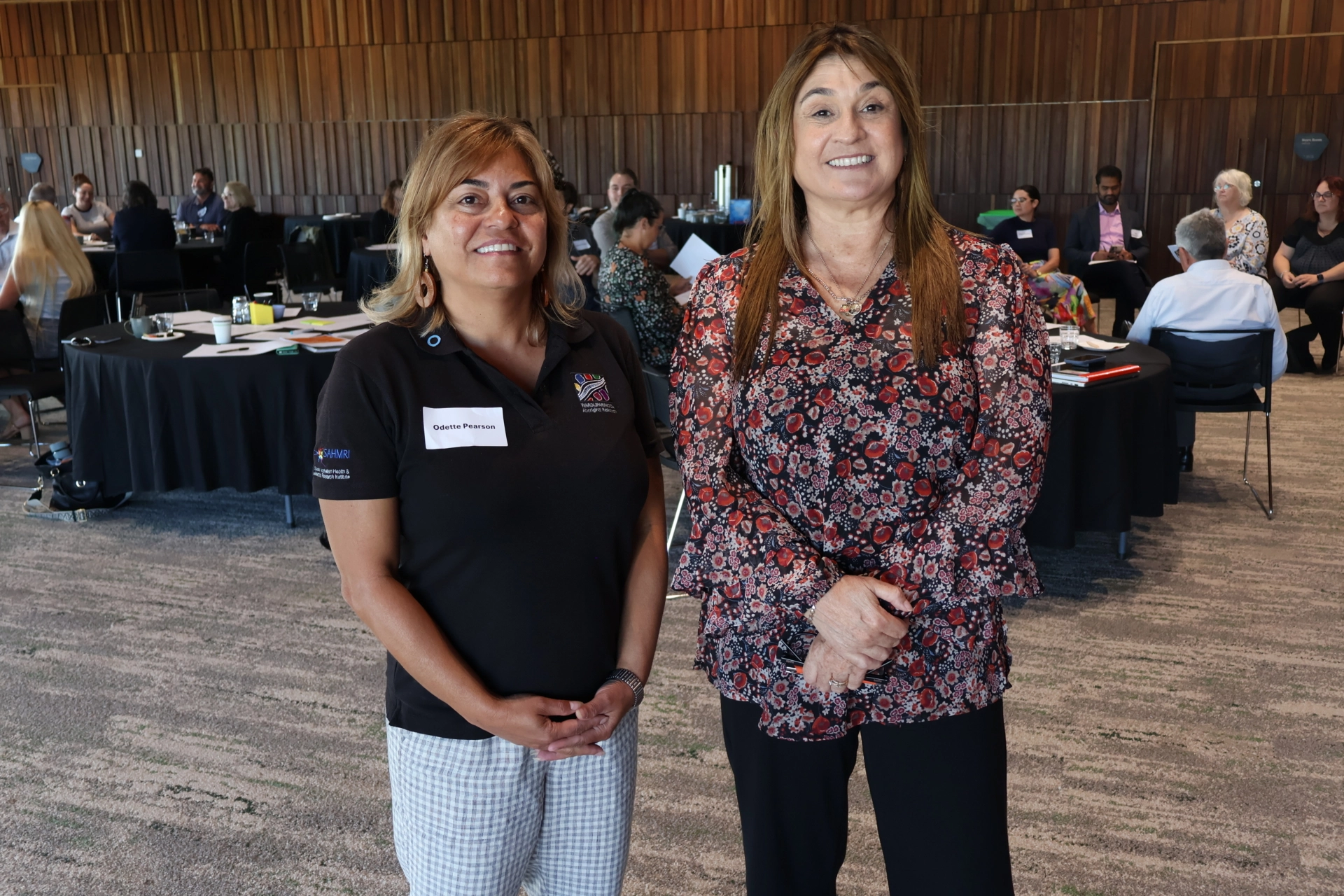
Researchers, policymakers, healthcare organisations, both Aboriginal and non-Aboriginal from across the state have come together to help drive meaningful, system wide implementation of the refreshed South Australian Aboriginal Health Research Accord.
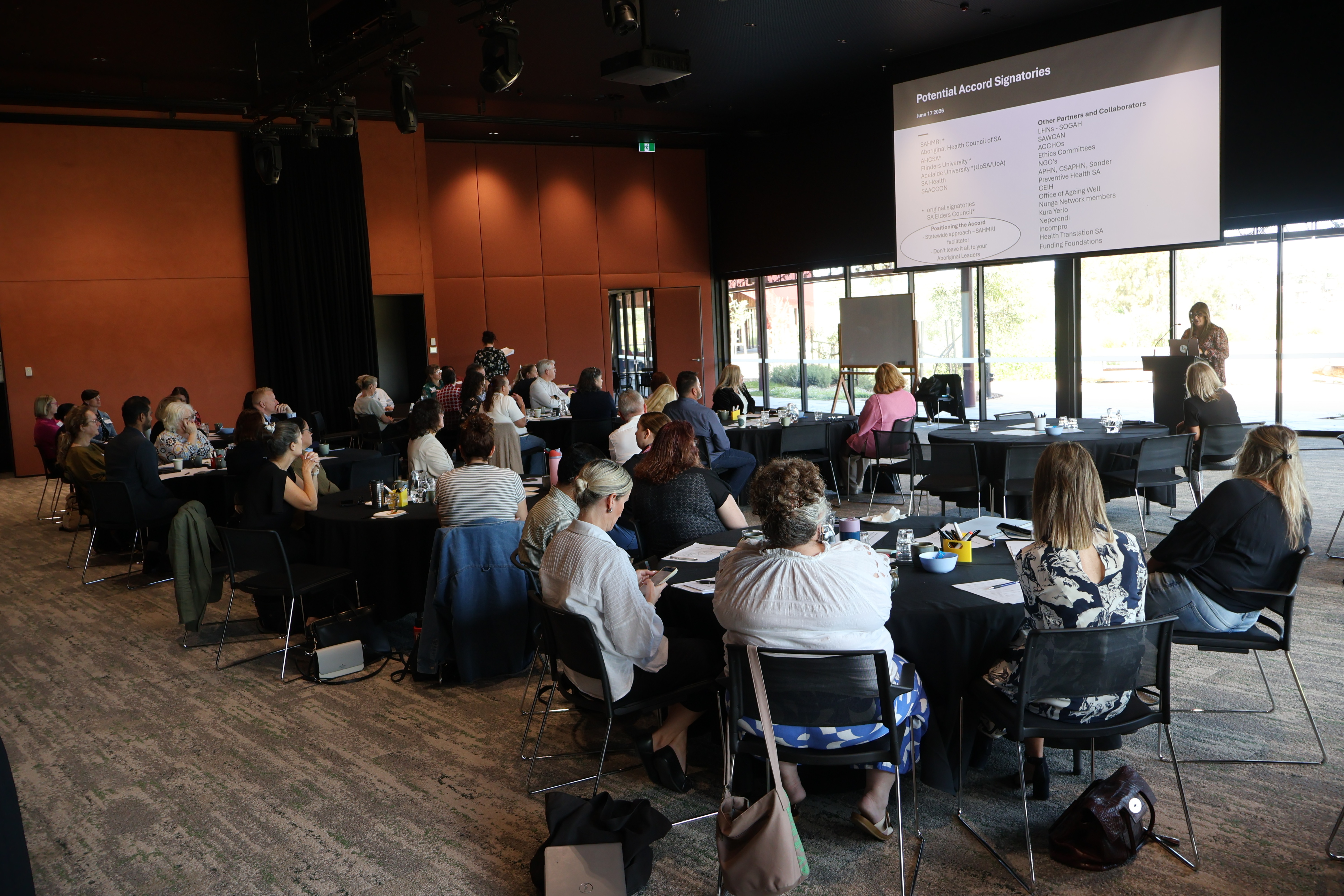
The stakeholder workshop held at Yitpi Yartapuultiku, Aboriginal Cultural Centre marked a critical step in the 2026 refresh of the Accord, shifting focus from the principles themselves to the practical structures, systems and tools needed to embed them across organisations involved in Aboriginal health research with South Australian Aboriginal communities.
Participants included representatives from Adelaide University, Flinders University, SA Health, Aboriginal community-controlled organisations, research funding foundations and ethics committees, all asked to consider how their organisations can take responsibility for implementing the Accord principles.
The Accord was first developed in 2014 in response to calls from the South Australian Aboriginal community for change in the way health research was conducted. While the principles have guided more culturally informed practice over the past decade, evaluation has shown implementation has been inconsistent across the health and medical research sector.
SAHMRI’s Wardliparingga Aboriginal Health Equity Theme led the Accord refresh, facilitated by Associate Professor Kim Morey and Professor Odette Pearson. A/Prof Morey says the workshop was about establishing collective accountability among research stakeholders across South Australia..
“We can develop health research principles with and for Aboriginal communities, which we’ve done, but the implementation of those principles actually sits with the stakeholders in the system,” A/Prof Morey said.
“This workshop gave members of our partner organisations the opportunity to think through how they will actually embed the Accord into their policies, processes and structures, resulting in greater statewide implementation.”
During the workshop, each table explored real world scenarios, including research funding guidelines, workforce training and ethics processes. Participants identified barriers to implementation and developed practical tools to support researchers and organisations to apply the Accord more consistently.
Trina O’Donnell from Bellberry Limited, a leading national reviewer of clinical research, says that although her organisation doesn’t specialise in Aboriginal Human Research Ethics Committee (HREC) reviews, they do commonly receive applications involving Aboriginal and Torres Strait Islander people.
“For us, it’s really important to understand how those applications should be considered, who should be involved in reviewing them, and to make sure we’re drawing on the right expertise,” Ms O’Donnell said.
“The workshop has been valuable not only for recognising the Accord principles, but also thinking about how we can put them into practice in ways that genuinely support the research that’s happening.”
The stakeholder session built directly on an Aboriginal-led workshop held earlier in March, that conducted a comprehensive review of the 10 Accord principles.
Aboriginal Elders, community members, and organisations came together to go through each principle in detail, asking whether they were still relevant, if anything was missing, and clarifying what each principle means.
The follow-up workshop focused on how the different elements of the system can go about implementing those principles.
Discussions highlighted both immediate opportunities for change, such as integrating the Accord into grant guidelines, ethics applications and organisational training programs, and longer-term ambitions that will require sustained partnership with and investment in Aboriginal communities and research workforce.
“Some of what we’re looking at is low hanging fruit. For example, organisations can start by changing research funding guidelines, so that the Accord principles are part of the application assessment criteria. Those are changes are relatively low cost and can happen quite quickly,” Prof Pearson said.
“Other ideas, like developing a central portal of resources and tools to support researchers and communities, will take longer and require partnerships and funding, but those conversations have now started.”
The refreshed Accord sets out a 10-year outlook, recognising that durable cultural and institutional change takes time. A key outcome of the workshop was reaffirming the Accord as a shared, statewide commitment, rather than a standalone guiding document.
“When the Accord was first developed in 2014, it was signed by five trailblazing signatories,” Prof Pearson said.
“What we’re working toward now is an Accord that’s owned by all stakeholders, including universities, government, Aboriginal health organisations and NGOs.”
The refreshed Accord is expected to be formally signed and launched in the middle of the year, with signatory organisations required to commit and be accountable for implementation.
“If we truly want research to deliver tangible health and social benefits for Aboriginal communities, then we have to do research differently,” Prof Pearson said.
“True to the meaning Accord, it is an opportunity for collective organisational agreement to adopt the principles, but it’s the actions of institutions that will determine whether it makes a real difference in health outcomes of Aboriginal people in South Australia.”
Click below to learn more about the Accord
Learn moreRelated Articles


SAHMRI is located on Kaurna Country. We pay respects to the Kaurna people of the Adelaide Plains and to all Aboriginal and Torres Strait Islander people. We are committed to embracing knowledge and culture as we continue our working journey to incorporate Aboriginal health research across all of our themes and further reconciliation.
Read more"Tirki nguta tappa tangka marninithi"
(Learning and knowledge are the pathway to alter the mind)
- Uncle Lewis Yerloburka O’Brien, Kaurna Elder