
From a small fundraiser to a first-in-human trial
17 Mar 2026
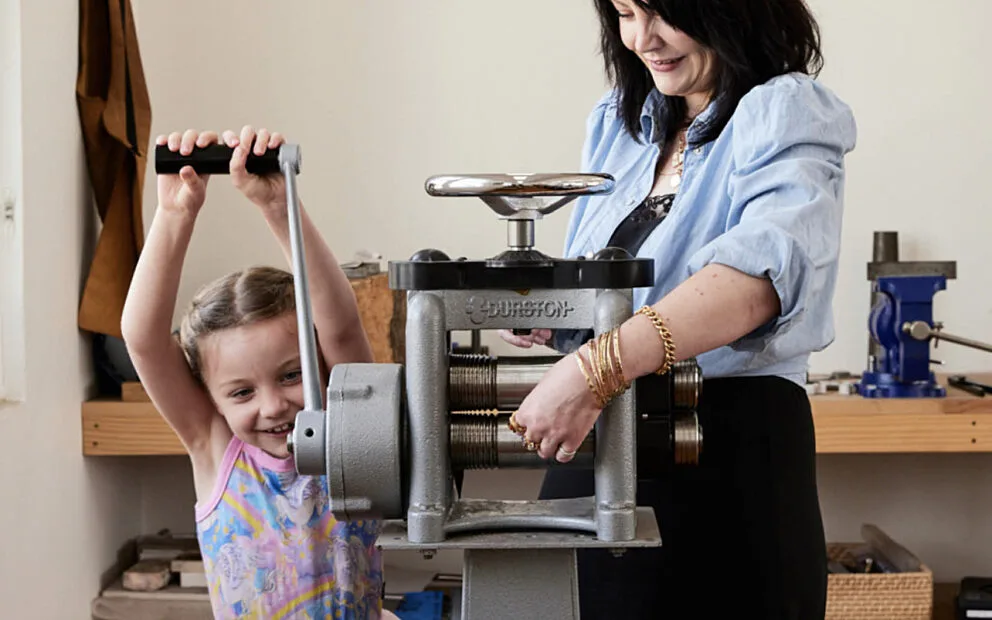
When Sydney jeweller Sarah Gardner decided to run a small fundraiser through her business, Sarah Gardner Jewellery, she hoped it would raise awareness and contribute in some small way to blood cancer research.
What she didn’t expect was that her effort would spark a chain of events that’s led to a novel immunotherapy now moving toward an Australian first-in-human clinical trial.
Sarah was originally diagnosed with essential thrombocythaemia in December 2021. After a third opinion, her diagnosis changed to myeloproliferative neoplasm unclassified, or pre myelofibrosis. Like many people diagnosed with cancer, the uncertainty was confronting.
“I was really scared and felt a great sense of anxiety about all the unknowns,” Sarah said.
“My biggest fear was leaving my daughter without a mother or being a very different version of myself.”
Balancing treatment, parenting and running a business hasn’t been easy…
“The biggest challenge is the fatigue, followed closely by the brain fog.”
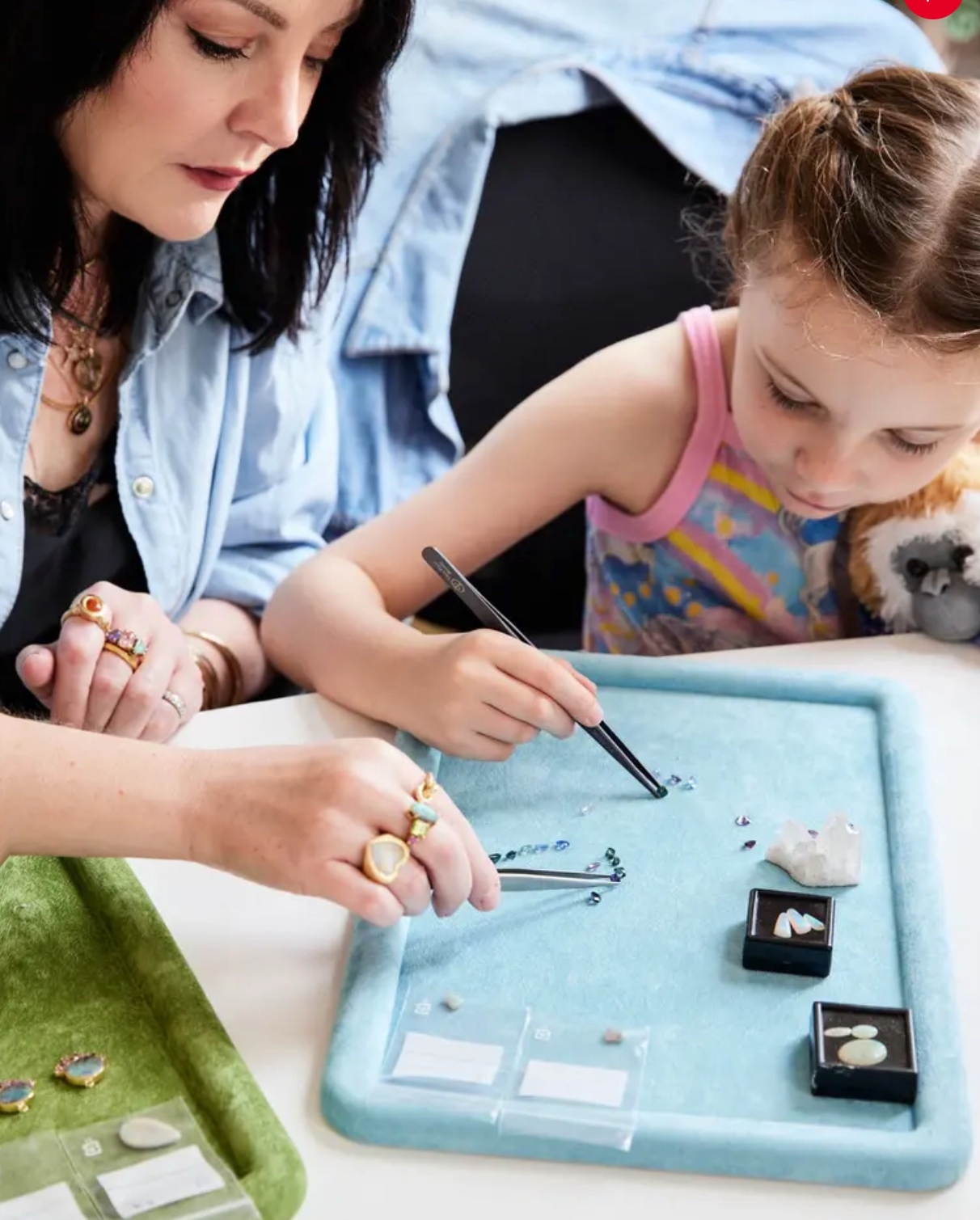
“I have a very busy life, and I really struggle when I can’t keep up. And as a parent, it’s hard having to rest so much and feeling like you’re missing out on precious moments.”
Motivated by a deep desire to raise awareness, and to inspire her daughter Rose, who’s now 10, Sarah decided to act.
“I couldn’t believe that blood cancers are the second most diagnosed cancers in Australia and yet no one seems to know that,” she said.
“When I started fundraising, I wanted my daughter to see that you can make a change.”
Using her jewellery business as a platform, Sarah organised a raffle that raised a stunning $30,000. The funds were channelled through Myeloproliferative Neoplasms Alliance Australia (MPN AA) and the Leukaemia Foundation into SAHMRI’s Blood Cancer Program, led by Professor Daniel Thomas.
The donation supported research led by Dr Chloe Thompson Peach, helping her pursue an innovative research idea and lay the crucial groundwork to earn additional funding, in the form of a four-year Cancer Council SA Early Career Fellowship in 2025.
“Sarah’s initial funding turned out to be career-launching,” Dr Thompson Peach said.
“It allowed me to pursue a high-risk idea at an early stage and generate the evidence needed to take my research further.”
Through her fellowship, Dr Thompson Peach is now leading new research into CALR-driven myelofibrosis, work that’s directly relevant to people like Sarah who have MPN unclassified or pre myelofibrosis.
These conditions sit along the same disease spectrum and often share the same underlying mutations, including CALR, long before full myelofibrosis develops.
By targeting these mutations earlier, the research aims to do more than manage symptoms. It seeks to change the course of the disease before it progresses.
What began as exploratory research has since shaped the direction of Dr Thompson Peach’s postdoctoral program and contributed to the development of a new immunotherapy, now progressing toward first in human trials expected to begin later this year.
“We knew we were onto something, but Sarah’s contribution allowed us to keep building tools and models we simply wouldn’t have had otherwise,” Prof Thomas said.
“Those tools have led directly to the development of a new therapy for many subtypes of myelofibrosis within less than 12 months.”
This early work has also opened the door to launch additional projects now being undertaken by Dr Thompson Peach’s PhD student, further expanding the impact.
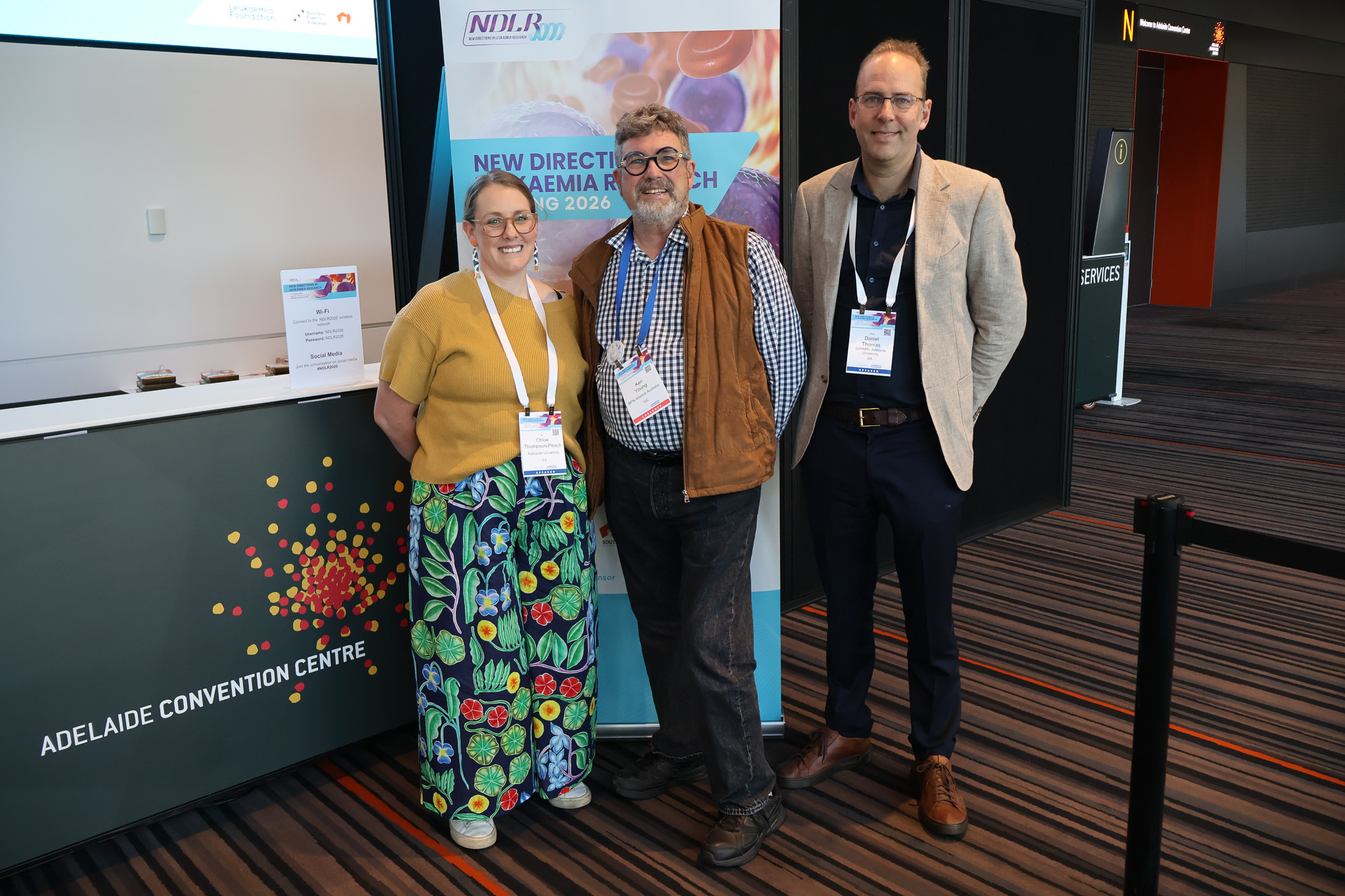
In early March, Professor Thomas co-chaired the New Directions in Leukaemia Research (NDLR) Meeting at the Adelaide Convention Centre, bringing researchers, clinicians and industry representatives together with cancer survivors to share the latest advances in blood cancer research. With attendees from around the world, it highlighted South Australia’s central role accelerating blood cancer research.
One attendee was patient advocate Ken Young, who founded Australia’s first online MPN support group in 1998 and later helped establish MPN AA. He says Sarah’s fundraiser demonstrates the power of consumer-led philanthropy.
“It’s like throwing a stone in the water. The ripples just keep going,” Ken said.
“When I spoke to Sarah to tell her what her fundraising had led to, she cried. She was able to show her daughter that one person really can change things.”
Ken says donations from patients themselves often carry weight far beyond their dollar value.
“Because these gifts come from people with lived experience, they really resonate,” he said.
“When researchers apply for grants, being able to include advocacy letters from the MPN community makes a huge difference. It shows people aren’t just signing forms anymore, they’re shaping research.”
Inspired by the impact of her initial fundraiser, Sarah has since gone on to raise a further $150,000 for MPN awareness through raffles, events and a silent auction. She says the impact still gives her goosebumps.
“I honestly can’t believe it. I still re-read the email Ken sent me,” she said.
“Being able to show Rose what that one decision has led to is incredibly special. From little things, big things grow.”
Support important research like this at SAHMRI
Donate todayRelated Articles



SAHMRI is located on Kaurna Country. We pay respects to the Kaurna people of the Adelaide Plains and to all Aboriginal and Torres Strait Islander people. We are committed to embracing knowledge and culture as we continue our working journey to incorporate Aboriginal health research across all of our themes and further reconciliation.
Read more"Tirki nguta tappa tangka marninithi"
(Learning and knowledge are the pathway to alter the mind)
- Uncle Lewis Yerloburka O’Brien, Kaurna Elder