
Skip to content

Omega-3 Test-and-Treat Program

Omega-3 Test-and-Treat Program
Project Status: In progress

Our Story

Omega-3 testing in pregnancy- from research to routine care 

Omega-3 testing in pregnancy is based on decades of world leading research led by the South Australian Health and Medical Research Institute (SAHMRI).

This research aims to reduce the risk of preterm birth, particularly early preterm birth (babies born before 34 weeks’ gestation), which is one of the leading causes of serious illness and death in newborn babies in developed countries.

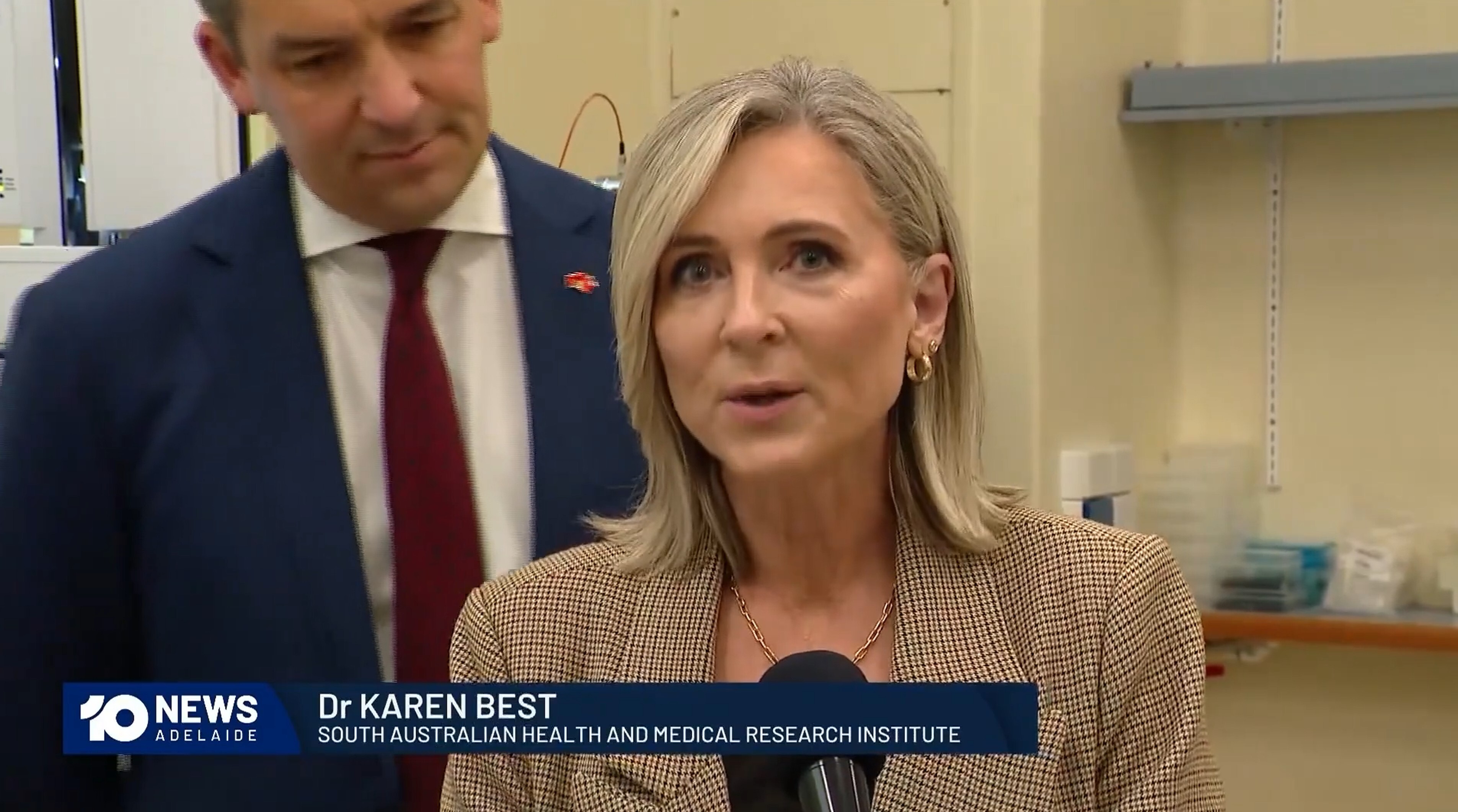
Our work has now been translated into a sustainable preterm birth prevention initiative, delivered in partnership with SA Pathology. Pregnant women in South Australia can now access omega-3 testing through SA Pathology as part of routine antenatal care.

Research behind omega‑3 testing in pregnancy

In 2009, our DOMInO trial (2399 women) suggested that omega‑3 may play a role in reducing the risk of early preterm birth  [1]. To examine this more broadly, we went on to conduct a comprehensive review of the global evidence for omega‑3 supplementation in pregnancy.

This Cochrane review, the highest level of evidence, included more than 70 studies involving around 20,000 pregnant women. The review found that omega‑3 supplementation reduced the overall risk of preterm birth (before 37 weeks) by 11% and the risk of early preterm birth by 42% [2].Early preterm birth is particularly important as babies born before 34 weeks have significantly greater health challenges.

Building on this evidence, SAHMRI led the world’s largest clinical trial of omega‑3 supplementation in pregnancy, known as the ORIP Trial [3]. ORIP showed that omega‑3 supplements do not benefit all women equally. Instead, benefits depend on omega‑3 levels early in pregnancy. The trial demonstrated that higher-dose omega‑3 supplements are most effective for women with low omega‑3 levels early in pregnancy, reducing the risk of early preterm birth by up to 77% [4].

From research to guidelines 

As a result of this research, targeted higher-dose omega 3 supplementation for women with low omega-3 levels was included in the Australian National Pregnancy Care Guidelines (2021), as well as in several international guidelines and position statements [5-8].

From guidelines to everyday care

To make this evidence practical for everyday care, SAHMRI partnered with SA Pathology to deliver the Omega-3 Test and Treat Program. Statewide implementation of this evidence-based approach (2021 - 2025) demonstrated that omega‑3 testing, alongside tailored supplementation advice, can be consistently and equitably embedded within existing antenatal care pathways. This was achieved without requiring additional appointments or blood tests for women [9]. Omega-3 testing is now offered by SA Pathology to all pregnant women in South Australia as part of routine pregnancy care.

National scale-up up of an evidence‑based preterm birth prevention strategy

Economic modelling has shown that national scale-up of omega-3 testing and targeted supplementation would not only prevent preterm births and reduce the tremendous burden on babies and families, but would also generate cost savings for the Australian health system [10].

For this reason, SAHMRI is now working with partners across Australia to make omega-3 testing and evidence-based supplementation advice available to all pregnant women.

[1] M. Makrides, R.A. Gibson, A.J. McPhee, L. Yelland, J. Quinlivan, P. Ryan, D.O.I. Team, Effect of DHA supplementation during pregnancy on maternal depression and neurodevelopment of young children: a randomized controlled trial, Jama, 304 (2010) 1675–1683. 
https://jamanetwork.com/journals/jama/fullarticle/186750

[2] P. Middleton, J.C. Gomersall, J.F. Gould, E. Shepherd, S.F. Olsen, M. Makrides, Omega-3 fatty acid addition during pregnancy, Cochrane Database Syst Rev, 11 (2018) CD003402.
https://www.cochranelibrary.com/cdsr/doi/10.1002/14651858.CD003402.pub3/full

[3] M. Makrides, K. Best, L. Yelland, A. McPhee, S. Zhou, J. Quinlivan, J. Dodd, E. Atkinson, H. Safa, J. van Dam, N. Khot, G. Dekker, M. Skubisz, A. Anderson, B. Kean, A. Bowman, C. McCallum, K. Cashman, R. Gibson, A Randomized Trial of Prenatal n-3 Fatty Acid Supplementation and Preterm Delivery, N Engl J Med, 381 (2019) 1035–1045.
https://www.nejm.org/doi/full/10.1056/NEJMoa1816832

[4] L.A. Simmonds, T.R. Sullivan, M. Skubisz, P.F. Middleton, K.P. Best, L.N. Yelland, J. Quinlivan, S.J. Zhou, G. Liu, A.J. McPhee, R.A. Gibson, M. Makrides, Omega-3 fatty acid supplementation in pregnancy-baseline omega-3 status and early preterm birth: exploratory analysis of a randomised controlled trial, BJOG : an international journal of obstetrics and gynaecology, 127 (2020) 975–981.
https://obgyn.onlinelibrary.wiley.com/doi/10.1111/1471-0528.16168

[5] Living Evidence for Australian Pregnancy and Postnatal Care, Australian pregnancy care guidelines, in, 2025.
https://app.magicapp.org/#/guideline/jm83RE/section/jNxggg

[6] K.P. Best, R.A. Gibson, M. Makrides, ISSFAL statement number 7 - Omega-3 fatty acids during pregnancy to reduce preterm birth, Prostaglandins Leukot Essent Fatty Acids, 186 (2022) 102495.
https://www.plefa.com/article/S0952-3278(22)00107-7/fulltext

[7] I. Cetin, S.E. Carlson, C. Burden, E.B. da Fonseca, G.C. di Renzo, A. Hadjipanayis, W.S. Harris, K.R. Kumar, S.F. Olsen, S. Mader, F.M. McAuliffe, B. Muhlhausler, E. Oken, L.C. Poon, L. Poston, U. Ramakrishnan, C.C. Roehr, C. Savona-Ventura, C.M. Smuts, A. Sotiriadis, K.P. Su, R.M. Tribe, G. Vannice, B. Koletzko, C.H.F.E.A.o.P.E.B. Clinical Practice Guideline on behalf of Asia Pacific Health Association, O. College of, E.F.f.t.C.o.N.I.E.S.f.P.R. Gynaecology, H. International Society for Developmental Origins of, Disease, Omega-3 fatty acid supply in pregnancy for risk reduction of preterm and early preterm birth, Am J Obstet Gynecol MFM, 6 (2024) 101251.
https://www.ajogmfm.org/article/S2589-9333(23)00393-2/fulltext

[8] C. Savona-Ventura, T. Mahmood, S. Mukhopadhyay, F. Louwen, Omega-3 fatty acid supply in pregnancy for risk reduction of preterm and early preterm birth: A position statement by the European Board and College of Obstetrics and Gynaecology (EBCOG), Eur J Obstet Gynecol Reprod Biol, 295 (2024) 124–125.
https://www.ejog.org/article/S0301-2115(24)00057-5/fulltext

[9] K.P. Best, C. Northcott, L.A. Simmonds, P. Middleton, L.N. Yelland, V. Moffa, K. Lam, P. Coates, C. Späth, C.W.-K. Siu, K. Glover, R. Smith, R. Gibson, M. Makrides, Feasibility, Implementation and Early Adoption of an Omega-3 Test-and-Treat Program to Reduce Preterm Birth, medRxiv, (2025) 2025.2006.2012.25329455.
DOI: 10.5694/mja2.70101
https://onlinelibrary.wiley.com/doi/full/10.5694/mja2.70101

[10] Hossein Haji Ali Afzali, Ecushla Linedale, Craig Martin, Muktar Ahmed, Julie Quinlivan, Andrew McPhee, Penelope Coates, Lucas Semmler, David Cox, Robert Gibson, Maria Makrides, Karen P Best. Cost-effectiveness analysis of routine Omega-3 Testing and Supplementation in Pregnancy to Reduce Early Preterm Birth in Australia. ClinicoEconomics and Outcomes Research. Accepted for publication

Please direct any queries to the project team via email: omega3@sahmri.com

We acknowledge funding support from the below organisations

Share Page