
Postgraduate helping to shape policy for Australia’s research future
02 Dec 2025
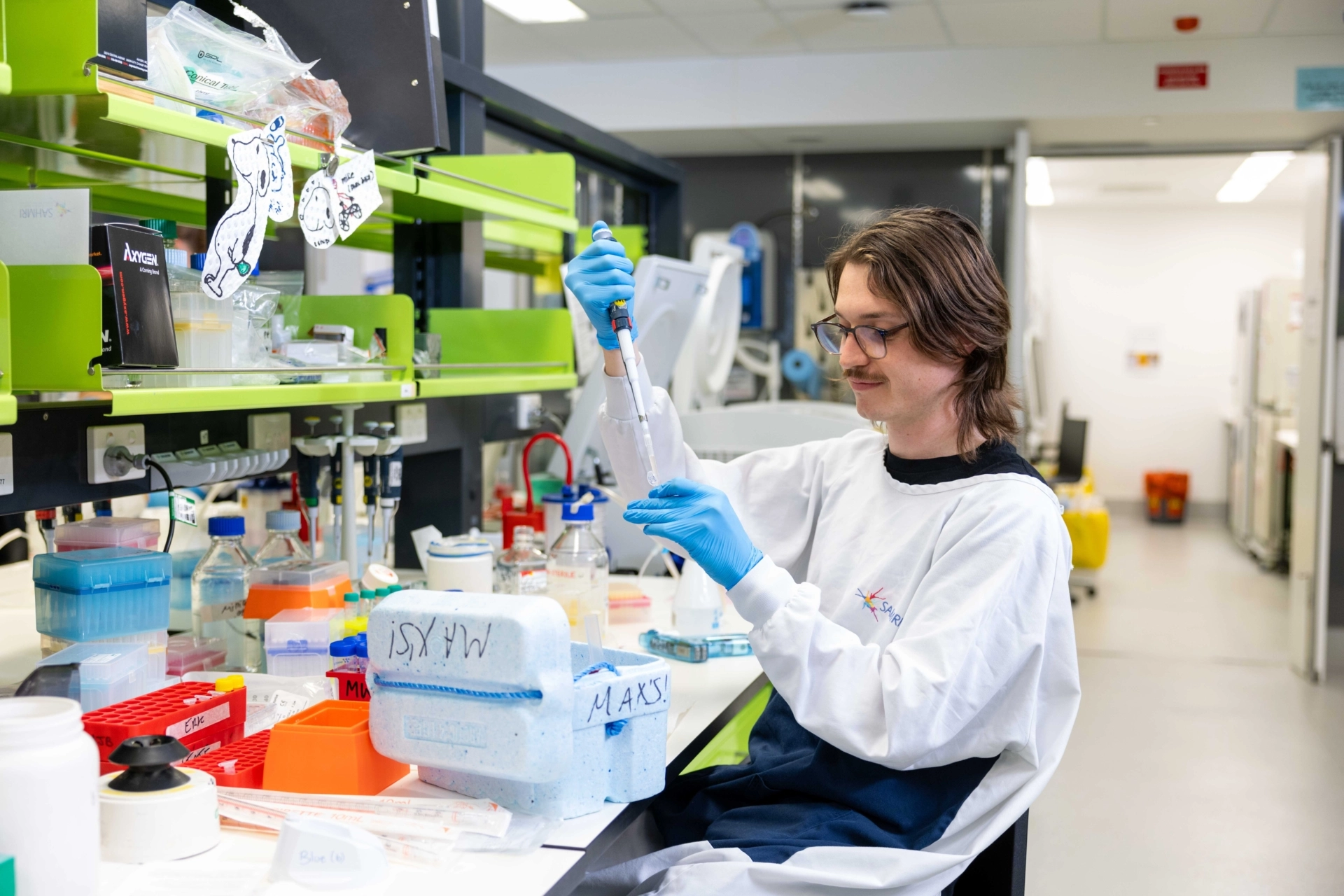
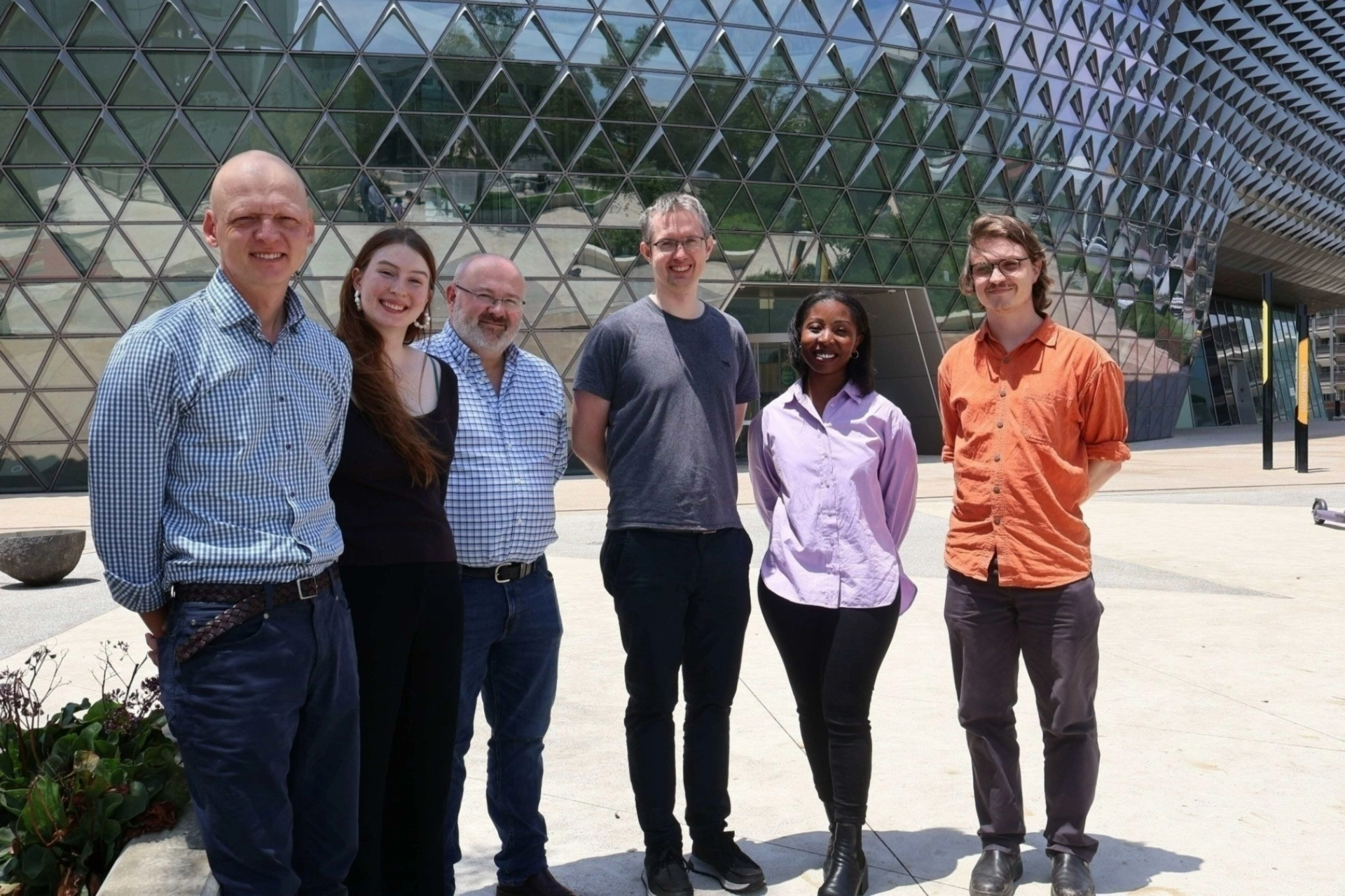
A SAHMRI PhD candidate is working to influence the future of Australia’s research system by ensuring postgraduate voices are heard in national policy decisions.
Maxim Buckley is the Policy and Research Advisor for the Council of Australian Postgraduate Associations (CAPA), the peak body representing postgraduate student organisations around the country.
He’s played a major role in driving CAPA’s recent pursuits, which include working to increase HDR stipends to the minimum wage, growing the Research Training Program funding pool, ensuring students with mandatory placements are included in the Commonwealth Prac Payment, and creating efficiencies in grant submission processes.
Max says CAPA’s growing influence reflects a national appetite for change.
“Postgraduate students are at the coalface of Australia’s research. Presently, the system relies on them doing an enormous amount of work for next to no financial benefit. Whichever poverty line you choose to use, postgraduate students are below it” he said.
“As a sector, we need to make sure the settings that support researchers are aligned with the actual conditions they face. Our goal is to strengthen the entire research pipeline by making postgraduate study more sustainable.”
Working alongside CAPA President Jesse Gardner-Russell and Vice President Richard Lee, Max has written several major submissions, including those for the Federal Budget 2025/26, the Strategic Examination of Research and Development, the draft Commonwealth Scholarships Guidelines and the Productivity Commission.
CAPA’s work has been sighted in outputs from the Strategic Examination of Research and Development and the Productivity Commission. Recommendations to streamline grant submissions and to require universities to reserve board positions for postgraduate students have both been publicly acknowledged by relevant departments.
Max says streamlining grant processes has the potential to make significant impact.
“Researchers collectively spend a staggering number of hours each year preparing grant submissions across ~250 federal programs. A change as small as a consistent resume template would free up an enormous amount of time for what researchers do best: research,” he said.
CAPA’s advocacy efforts have been gaining ground and media attention. This year representatives have contributed commentary in The Australian, made appearances on the ABC, and recently met with Australian Tertiary Education Commission Chief Commissioner Mary O’Kane, to outline their vision for the future of the university system.
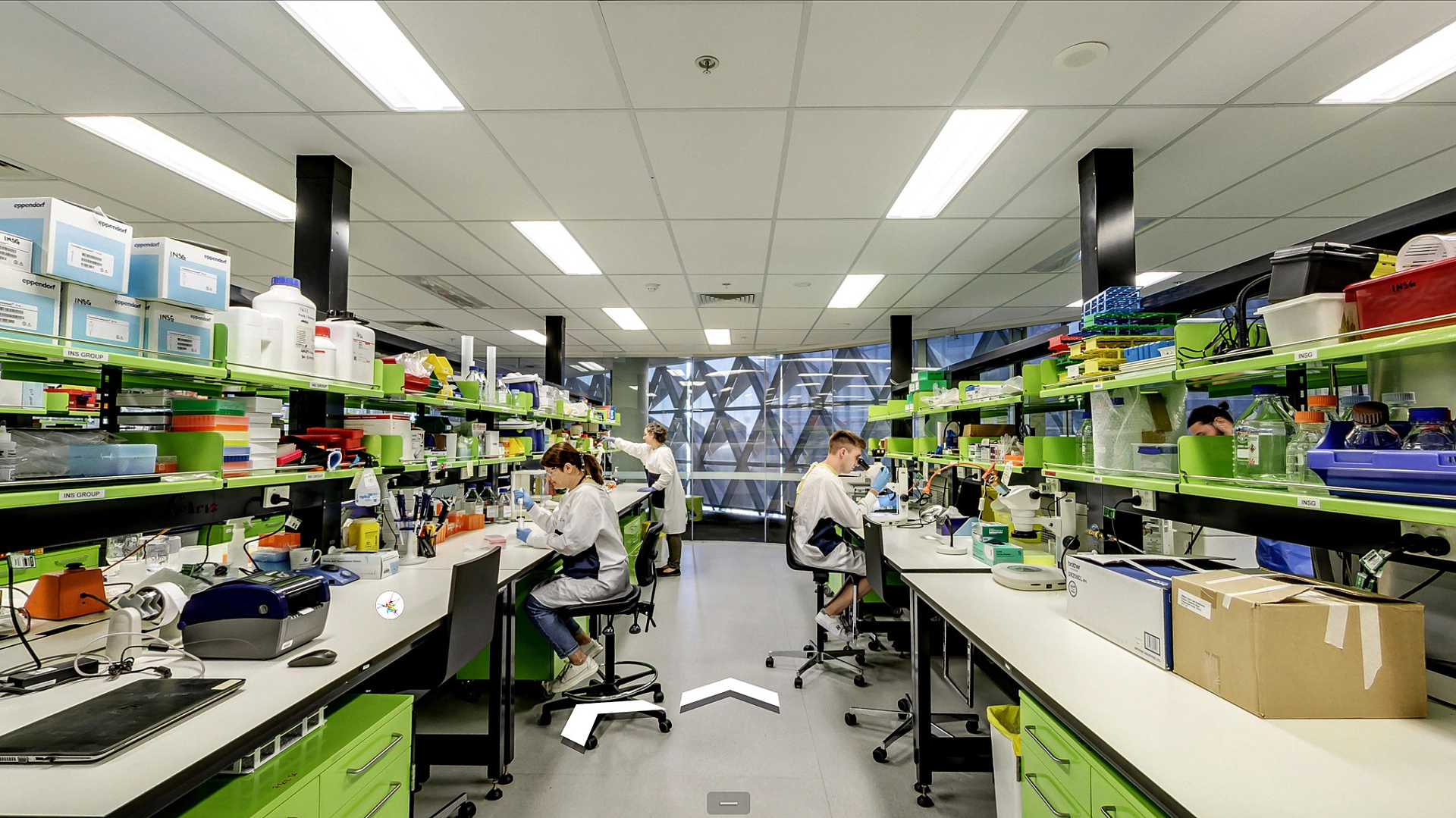
Maxim’s work sits alongside his PhD research at SAHMRI, and he says the connection between policy and on-the-ground science is what motivates him.
“Being an active researcher gives me a unique perspective on policy. We can unravel complex policy and apply it in real time, improving recommendations to government and eventually the entire Australian research system” he said.
“That perspective inspires me to advocate for changes that I hope will make a tangible difference to the lives of hard-working scientists, and the overall quality of research Australia can deliver.”
Contribute to research at SAHMRI
Donate todayRelated Articles


SAHMRI is located on Kaurna Country. We pay respects to the Kaurna people of the Adelaide Plains and to all Aboriginal and Torres Strait Islander people. We are committed to embracing knowledge and culture as we continue our working journey to incorporate Aboriginal health research across all of our themes and further reconciliation.
Read more"Tirki nguta tappa tangka marninithi"
(Learning and knowledge are the pathway to alter the mind)
- Uncle Lewis Yerloburka O’Brien, Kaurna Elder