National expansion of world-first preterm birth prevention program announced as health and medical research strategy launches at SAHMRI
28 Oct 2026
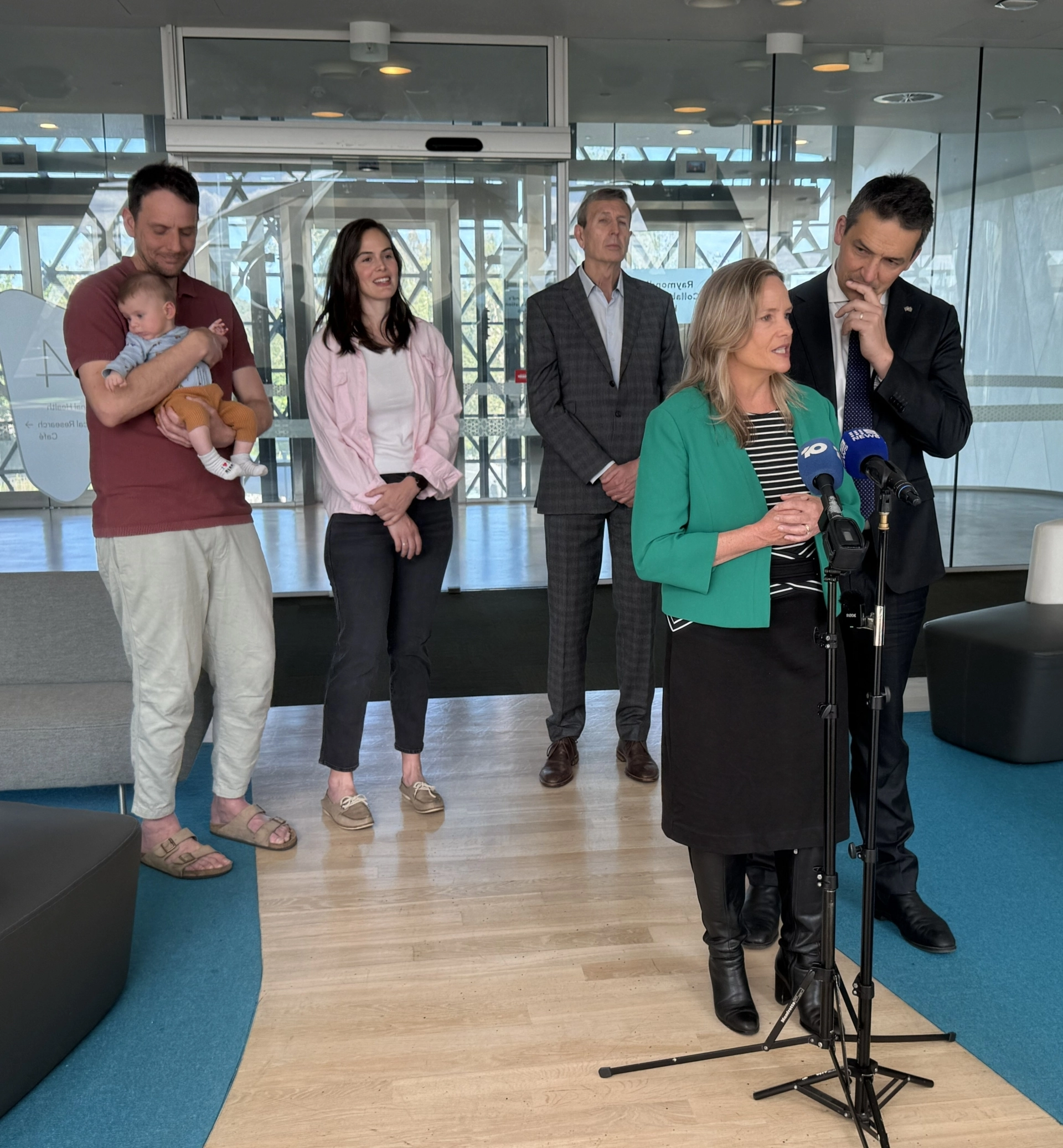
More Australian families could soon benefit from a world-leading South Australian pregnancy program proven to reduce the risk of preterm birth.
A new $1.4 million National Health and Medical Research Council (NHMRC) Partnership Grant will support the national scale-up of the Omega-3 Test and Treat Program, building on more than a decade of SAHMRI research that’s established South Australia as a global leader in omega-3 testing during pregnancy and preterm birth prevention.
The announcement comes as Minister for Health and Wellbeing Blair Boyer launched South Australia's first Health and Medical Research Strategy at SAHMRI alongside Commissioner for Excellence and Innovation in Health Professor Keith McNeil, outlining a 10-year vision to strengthen research, innovation and translation across the state.
Led by Associate Professor Ecushla Linedale, Director of Research Translation and Scale-Up within SAHMRI's Pregnancy and Newborn Health program, the national expansion of the Omega-3 Test and Treat Program will help health services across Australia adapt and implement a model of care pioneered in SA.
In June, the state became the first place in the world to offer free omega-3 testing as part of routine antenatal care, translating years of local research into everyday care for pregnant women.
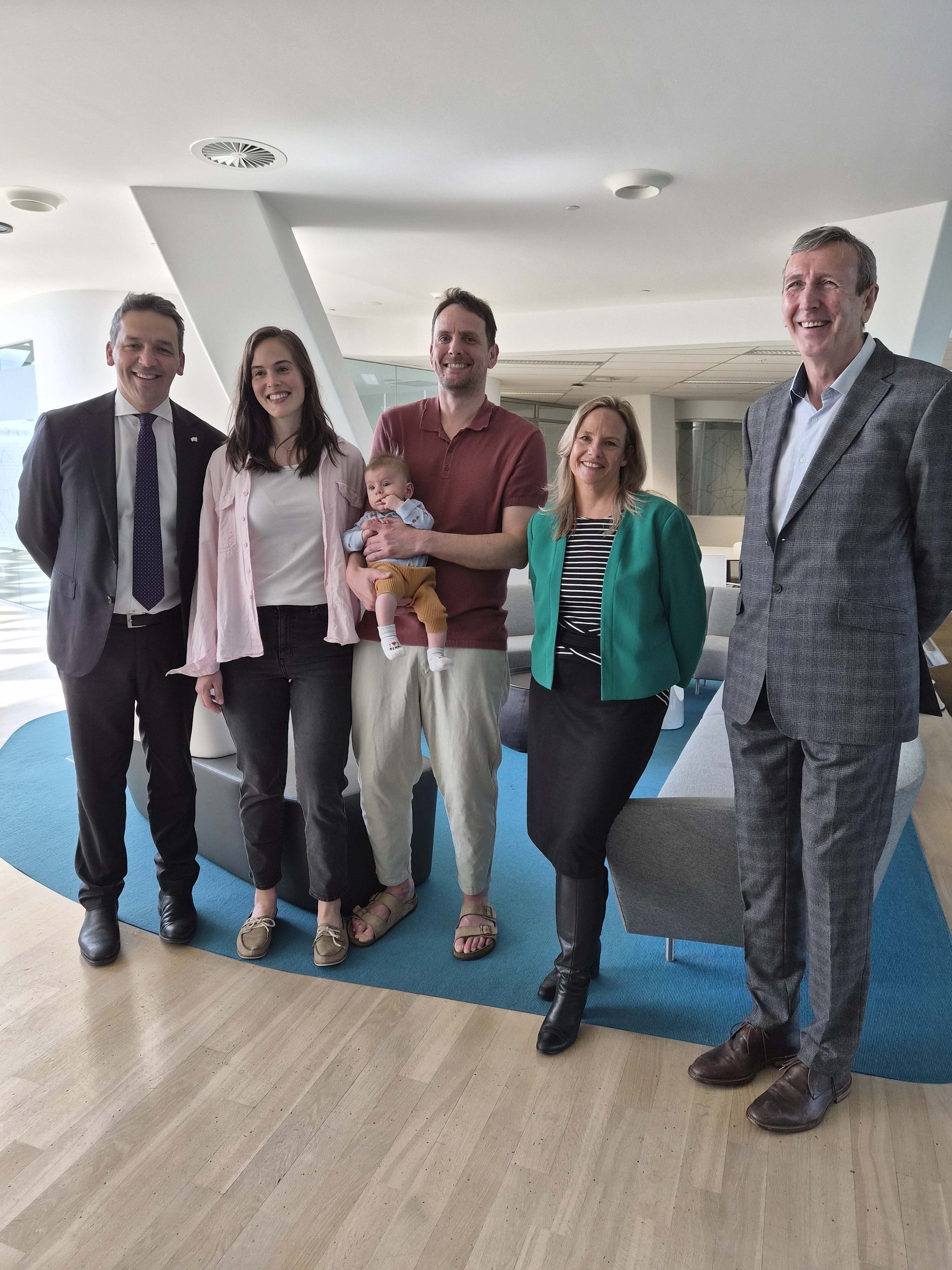
Minister Boyer says the program demonstrates exactly the kind of research translation the new state strategy aims to accelerate.
"South Australia has a proud history of producing world-leading health and medical research, but what matters most is ensuring those discoveries reach patients and families as quickly as possible," Minister Boyer said.
"Our omega-3 preterm birth prevention program shows exactly what's possible when researchers, clinicians and health services work together.
"A discovery made right here in South Australia is now helping shape national efforts to prevent premature birth, improving outcomes for babies and families and giving more children the best possible start in life."
The project builds on well over a decade of research led by Professor Maria Makrides, Professor Bob Gibson, Dr Karen Best and colleagues at SAHMRI.
Their work showed omega-3 supplementation can reduce the risk of early preterm birth, before 34 weeks' gestation, by up to 77 per cent among women with low omega-3 levels early in pregnancy.
More than 1,100 pregnant women now receive omega-3 testing each month through SA Pathology. Since the program began in 2021, over 45,000 women have been tested in South Australia, with around 17 per cent identified as having low omega-3 levels and an increased risk of early preterm birth.
One of those women was SAHMRI researcher Dr Ivana Stankov, who undertook omega-3 testing as part of her first-trimester screening while pregnant with her son, Monty.
Dr Stankov says the test gave her confidence that she was on the right track during her pregnancy.
"I noticed the omega-3 test as part of the first trimester screening that my GP offered and it just gave us a lot of reassurance around my levels," Dr Stankov said.
"My test came back normal, so my GP advised that I just continue taking the regular dose of omega-3 as part of my prenatal supplements. It was really great to have that reassurance moving forward."
Dr Stankov says one of the program's greatest strengths was that testing was incorporated into care she was already receiving.
"It's hard and overwhelming sometimes to keep track of all the tests and scans and appointments and make sure you're doing everything at the right time," Dr Stankov says.
"So having that test just be available through my GP without having to go through too much more effort to get it was really fantastic."
Each year, more than 25,000 Australian babies are born preterm. Preventing babies from being born too soon means more babies getting the best start in life, more families avoiding the disruption and trauma of extended hospital stays, and less pressure on neonatal intensive care and hospital services.
Economic modelling suggests national adoption of South Australia's Omega-3 Test and Treat Program could prevent around 640 early preterm births each year and save more than $26 million in direct healthcare costs annually.
"This initiative is the next step in a remarkable journey from research discovery to routine care," Associate Professor Linedale says.
"South Australia has shown that omega-3 testing can be successfully incorporated into routine pregnancy care. We now have the opportunity to work with partners across the country to understand how the model can be adapted to different health systems, so more women and babies can benefit."
The initiative is backed by a national coalition of implementation partners, including
SA Pathology, SA Health, the Commission on Excellence and Innovation in Health (CEIH), Tasmanian Health Service, Western NSW Local Health District, Canberra Health Services, Western Health (VIC), gpex, the Perinatal Society of Australia and New Zealand, Public Pathology Australia, Nestlé, Fatty Acid Labs, and women and their families. The Hospital Research Foundation Group, Health Translation SA and the Thyne Reid Foundation have also provided longstanding support that helped lay the foundations for this next phase.
The $1.4 million NHMRC Partnership Grant is being supported by a further $1.4 million in cash and in-kind contributions from project partners.
Support research like this at SAHMRI
Donate hereRelated Articles




SAHMRI is located on Kaurna Country. We pay respects to the Kaurna people of the Adelaide Plains and to all Aboriginal and Torres Strait Islander people. We are committed to embracing knowledge and culture as we continue our working journey to incorporate Aboriginal health research across all of our themes and further reconciliation.
Read more"Tirki nguta tappa tangka marninithi"
(Learning and knowledge are the pathway to alter the mind)
- Uncle Lewis Yerloburka O’Brien, Kaurna Elder